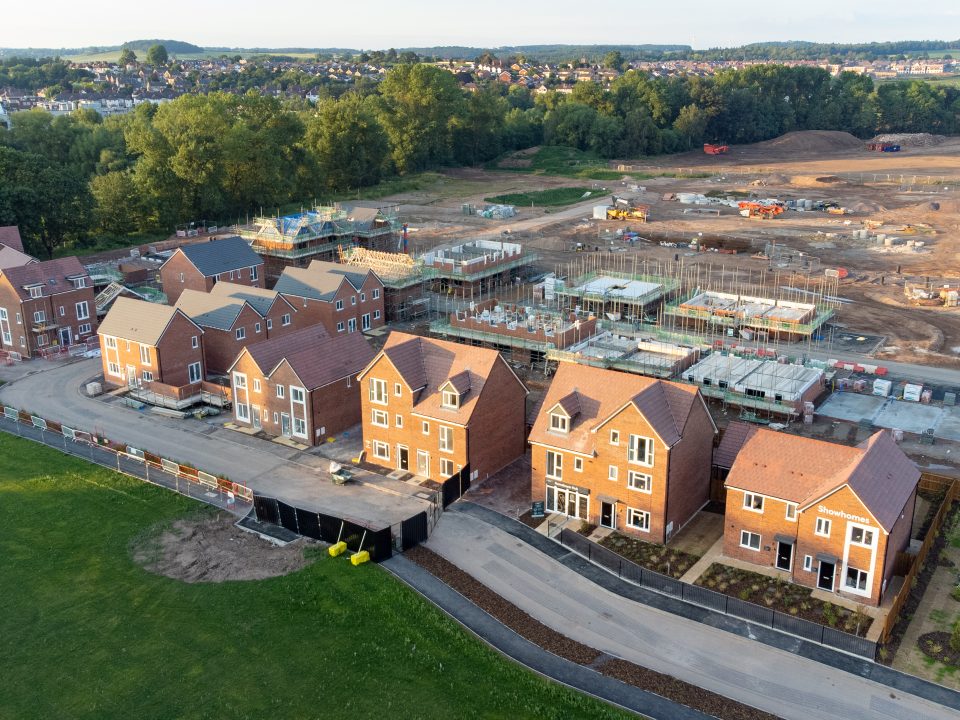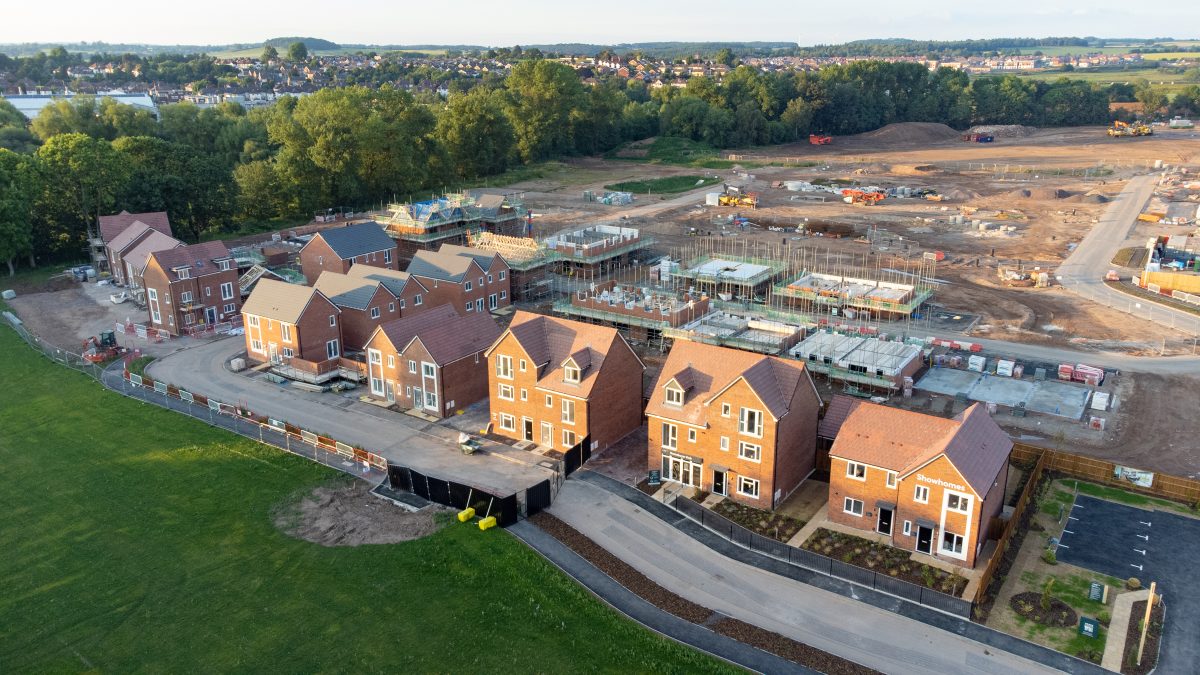
The Government has announced plans for a new first-time buyer scheme in England – and while much of the attention will understandably be on helping people onto the property ladder, there could be another important consequence: giving developers greater confidence to bring forward new homes and development sites.
The proposed “Your First Home” scheme is expected to allow eligible first-time buyers to purchase a new-build property with a deposit of just 2.5%, supported by a 20% government-backed equity loan.
For the development industry, that detail matters.
Why buyer demand matters to development
There is often a tendency to discuss the housing shortage purely in terms of planning permissions and the availability of development land.
Housing delivery depends on several interconnected factors:
- A site needs to be viable.
- A developer needs access to finance.
- Construction costs need to work against expected sales values.
- Planning needs to be achievable.
- Ultimately, there need to be buyers capable of purchasing the completed homes.
The Government itself has acknowledged that the new-build market is facing challenging conditions, including rising construction costs, and says the proposed scheme is intended not only to help first-time buyers but also to provide stimulus to the new-build market.
That could have consequences further back through the development process.
Could it improve confidence in land acquisition?
When developers assess a potential site, one of the most important considerations is the likely market for the completed homes.
A development consisting predominantly of two- and three-bedroom houses, for example, may have a very different sales profile from a scheme dominated by larger executive homes or apartments.
If Your First Home materially increases the number of people capable of purchasing a new-build property, developers may have greater confidence when assessing sites aimed at the first-time buyer and young-family markets.
That does not automatically make an unviable site viable.
However, increased confidence in the eventual sales market can influence decisions over land acquisition, development appraisals, housing mix and the timing of bringing sites forward.
Lessons from Help to Buy
There is precedent for this.
The Government’s recently published evaluation of the previous Help to Buy equity loan scheme found that more than 387,000 homes were purchased through the programme, including around 328,000 purchases by first-time buyers.
The evaluation found that Help to Buy was effective in supporting home ownership in some areas, although its impact varied geographically and it did not overcome affordability problems in areas where property was already particularly expensive.
Your First Home therefore appears intended to build upon some of the principles of the previous scheme while introducing new eligibility and affordability controls.
The final structure will be important.
What should landowners be considering?
For landowners considering selling land for residential development, changes to the new-build market should not be viewed in isolation.
The value and attractiveness of development land ultimately depend upon what can realistically and commercially be delivered on it.
If the new scheme strengthens demand for types of new-build homes, this could influence the types of sites developers are actively looking to acquire.
This is particularly relevant for:
- smaller and medium-sized residential development sites
- sites suitable for starter and family homes
- land on the edge of existing settlements
- sites already benefiting from planning permission
- opportunities where a developer is currently reviewing viability
- landowners considering whether to promote, option or sell their land
It will also make understanding the appropriate housing mix increasingly important.
Simply achieving the maximum number of units is not necessarily the same as creating the strongest development proposition.
There are still unanswered questions
The full details of Your First Home have not yet been published.
The Government has said that household income limits and local property-price caps will form part of the scheme, while participating developers will be expected to make a contribution towards its costs.
The Budget is expected to provide further information on the costs, eligibility criteria and implementation timetable.
Those details will determine how significant the scheme ultimately becomes for developers and the wider land market.
Our view from the land market
At UK Land Consultancy, we regularly speak with landowners and developers on both sides of the development process. One of the recurring themes is that planning permission alone does not create a successful development.
A scheme needs to work commercially, and it needs to produce homes that the market can purchase. Measures that improve access to new-build homeownership could therefore have an impact extending well beyond first-time buyers.
If increased buyer demand gives housebuilders greater confidence to acquire land, open new sites and accelerate development, the effects could ultimately feed through into the development land market.
For landowners, that makes it important to understand not simply what their land might be worth today, but what type of development the market is looking for and how changing housing policy could affect its potential.
Do you own land with development potential?
UK Land Consultancy works with landowners across the South of England to assess development opportunities, understand site potential and introduce suitable developers and purchasers.
If you own land, a large garden, commercial property, or another site that you believe may have development potential, speak to UK Land Consultancy.